How Smart Devices Are Supporting Smart Office Environments
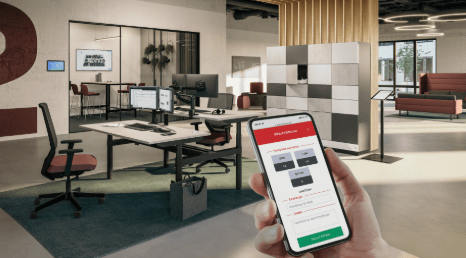
Smart devices reshape offices by aligning devices, workflows, and spaces into a cohesive system. Sensors, AI, and connectivity transform environmental data into actionable guidance for occupant flow, device behavior, and shared workspaces. Governance and contextual access maintain safety and privacy, while scalable analytics support adaptive collaboration. The result is an autonomous, resilient environment that boosts productivity and decision making—yet the implementation details, tradeoffs, and ROI warrant careful examination before proceeding.
What a Smart Office Really Delivers for Teams
Smart offices translate technology into tangible team value by aligning devices, workflows, and spaces. A smart office delivers clear coordination, reduced friction, and scalable autonomy, enabling teams to focus on outcomes rather than tools. Contextual parameters define access and routines, while privacy considerations shape data usage. The design emphasizes adaptable spaces, measurable efficiencies, and freedom to explore new collaboration models without compromise.
How Sensors, AI, and Connectivity Drive Collaboration
Sensors, AI, and connectivity fuse to elevate collaboration by turning environmental data into actionable insights, orchestrating occupant flow, device behavior, and shared workspaces.
The approach prioritizes sensor adoption as a core capability, enabling seamless coordination across rooms and teams. Data governance ensures privacy and integrity while enabling scalable analytics, guiding implementation decisions and sustaining adaptable, user-centric collaboration in evolving office environments.
Enhancing Safety, Security, and Compliance With Smart Devices
In modern smart offices, safety, security, and compliance are elevated through integrated smart devices that monitor access, hazard detection, and policy adherence in real time.
The approach emphasizes resilient architectures where access control, risk alerts, and audit trails align with governance objectives, enabling rapid response, clear accountability, and scalable privacy protections.
privacy risks are mitigated by data minimization and purpose-specific processing.
Choosing, Implementing, and Measuring ROI in a Smart Office
To determine the value of smart office investments, organizations should align device selection and deployment with specific, measurable outcomes—such as productivity gains, reduced downtime, and improved safety compliance.
The approach centers on choosing challenges, implementing integration, and measuring roi in a smart office with disciplined, architecture-minded planning, objective metrics, and scalable deployment that preserves autonomy while delivering tangible, freedom-enhancing results.
See also: latestroyalnews
Frequently Asked Questions
How Do Smart Devices Adapt to Different Office Cultures?
Adaptive interfaces enable devices to reconfigure interactions, while cultural customization adjusts norms, language, and workflows. The system supports varied office cultures by modular controls, neutral aesthetics, and rule-based personalization, empowering users to shape environments without compromising efficiency or autonomy.
What Are the Hidden Costs of Smart Office Deployment?
Hidden costs emerge in deployment risks, including integration, interoperability, and ongoing maintenance. The architectural approach prioritizes modularity, vendor-neutral standards, and scalable security, enabling a freedom-focused organization to mitigate cost shocks while preserving adaptable, future-ready smart office ecosystems.
Can Devices Function Offline During Network Outages?
An estimated 70% of devices can operate offline during outages, illustrating practical offline operation and network resilience. The architectural approach favors local autonomy, modular design, and intelligent fallbacks, enabling safe autonomy while preserving user freedom in disrupted environments.
How Is Employee Privacy Protected With Smart Sensing?
The approach: privacy safeguards are embedded in governance, while data minimization guides collection. The system employs transparent policies, on-device processing, and auditable controls, ensuring freedom to work, with aggregated insights preserving individual anonymity and workplace autonomy.
What Training Is Needed for Non-Technical Staff?
Training basics cover core concepts, security literacy, and device procedures, while support roles define escalation and governance. The approach remains concise, architectural, and solution-driven, enabling staff to operate freely with confidence in a smart office environment.
Conclusion
In the smart office, devices stand as glass walls—transparent, yet shaping movement and meaning. Sensors map corridors of intent, AI tunes cadence, and connectivity binds teams into a single scaffold. Privacy governs like a quiet keystone, ensuring arches don’t bend under pressure. The space becomes a blueprint for outcomes, where collaboration flows through orchestrated channels, safety nests within every corner, and ROI rises as a measurable beam. In this architecture, work remains purposeful, resilient, and human-centered.